Historical Timeline
Explore the key events in the history of electricity and electrostatics that led to our modern understanding.
Historical Timeline
Explore the key events in the history of electricity and electrostatics that led to our modern understanding.
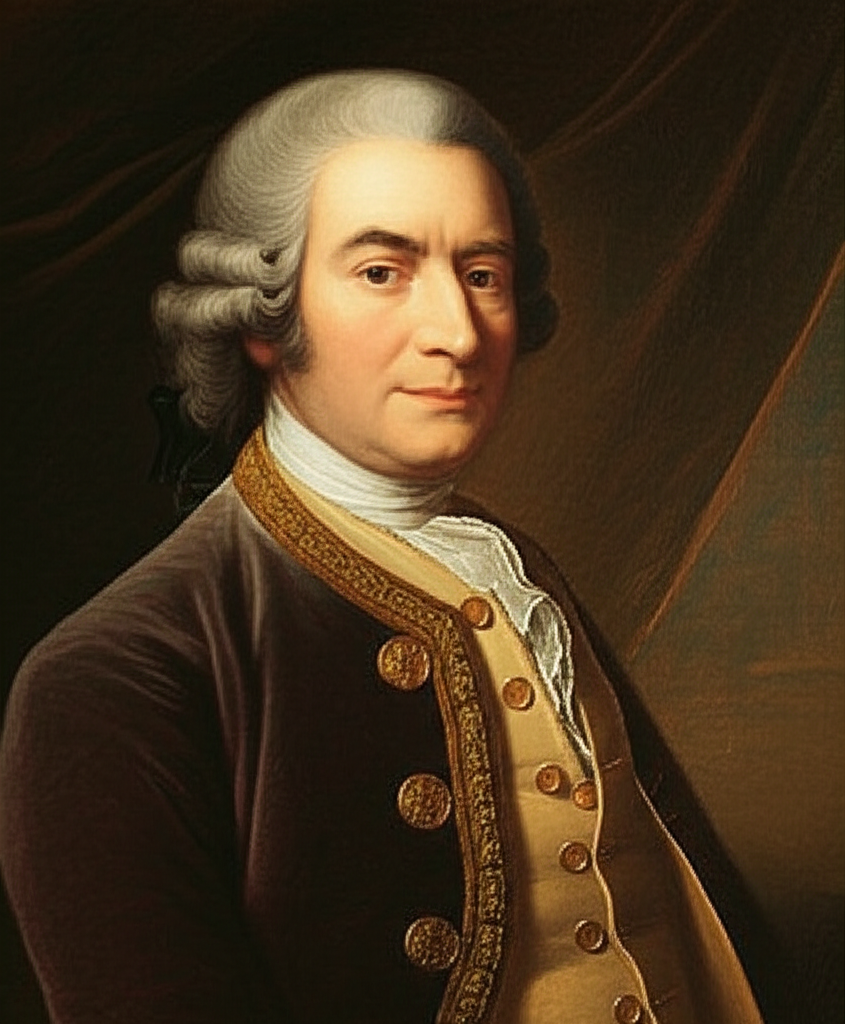
Coulomb's Law Published
Charles-Augustin de Coulomb published his findings on the inverse-square law of electrical force between charged particles.
About Charles-Augustin de Coulomb
Charles-Augustin de Coulomb (1736-1806) was a French physicist who began his career as a military engineer in the West Indies. In 1776, he returned to Paris and retired to a small estate to do his scientific research.
He invented a torsion balance to measure the quantity of a force and used it for determination of forces of electric attraction or repulsion between small charged spheres. He thus arrived in 1785 at the inverse square law relation, now known as Coulomb's law.
The law had been anticipated by Priestley and also by Cavendish earlier, though Cavendish never published his results. Coulomb also found the inverse square law of force between unlike and like magnetic poles.
The Torsion Balance
The torsion balance was a sensitive device to measure force. It was also used later by Cavendish to measure the very feeble gravitational force between two objects, to verify Newton's Law of Gravitation.
Coulomb's torsion balance consisted of a horizontal rod suspended from its middle by a thin fiber. At one end of the rod was a small charged sphere, and at the other end was a counterweight. A second charged sphere was brought near the first one, causing the rod to rotate by an angle proportional to the force between the charges.
By measuring this angle of rotation and knowing the properties of the fiber, Coulomb could calculate the force between the charges. By varying the charges and distances, he established the inverse square relationship.